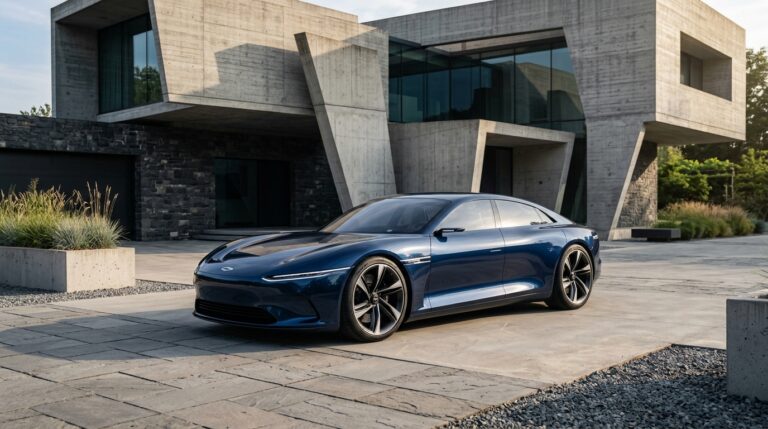
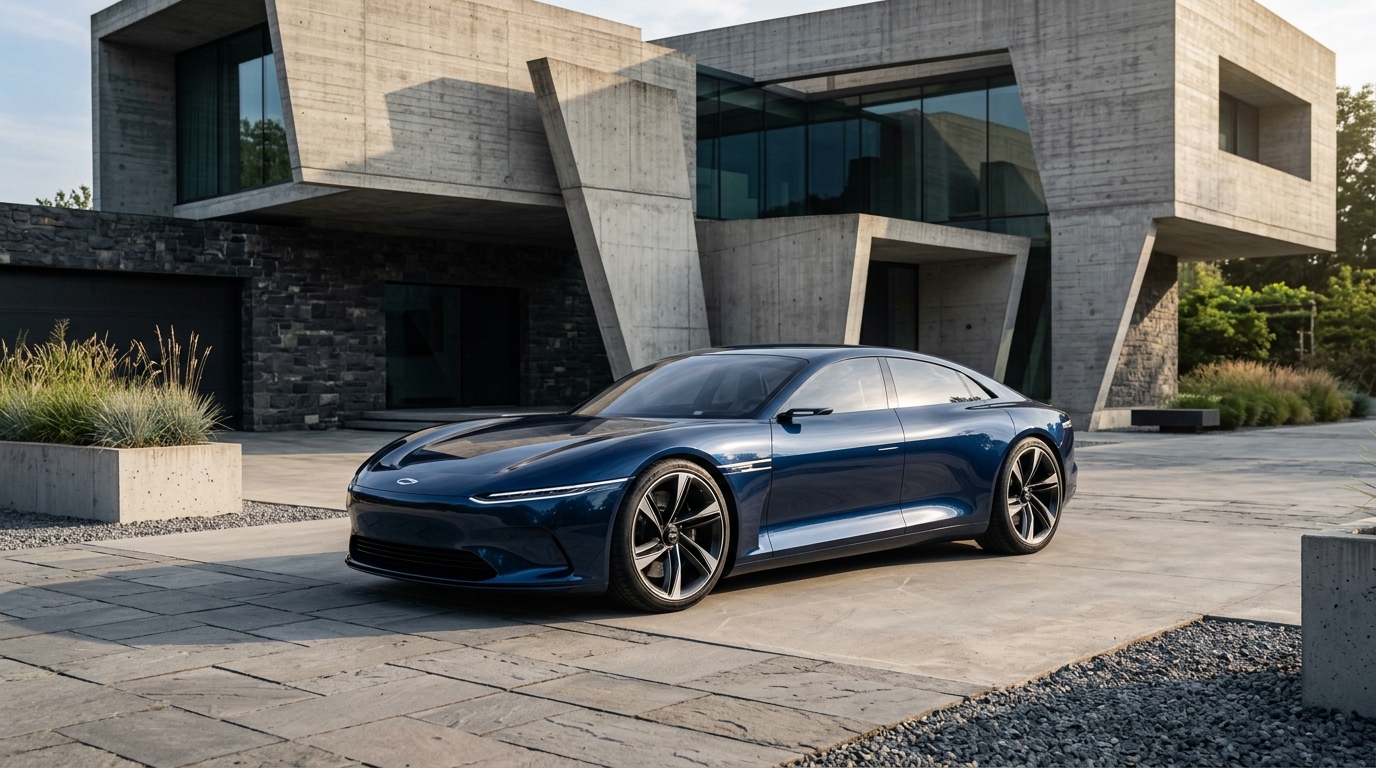
The Jaguar Type 01 2026 is more than a new electric grand tourer. It is Jaguar’s attempt to rebuild an entire design identity around architecture, proportion, material, and presence.
Jaguar officially unveiled the Type 01 in New York in October 2026. The production car follows the dramatic Type 00 concept but turns that visual statement into a four-door GT intended for real customers.
The result avoids many familiar electric-car cues. It has a long bonnet, low roof, short front overhang, extended rear proportions, and 23-inch wheels. Inside, a structural-looking central spine divides the cabin into four individual spaces.
Those decisions make the Type 01 especially interesting from a design perspective. Jaguar did not allow an existing electric platform to dictate the shape. Instead, the company developed a new architecture to support the proportions its designers wanted.
That reverses the normal relationship between engineering and styling. It also shows how electric-car architecture can become a creative tool rather than simply a packaging solution.
Why the Jaguar Type 01 2026 Looks Unlike Most Luxury EVs
Many electric vehicles share similar proportions because the engineering challenge pushes them toward similar solutions. A large battery sits beneath the floor. Designers want a spacious cabin. Aerodynamic efficiency matters. The result often becomes a relatively short bonnet and a long passenger compartment.
Jaguar deliberately moved away from that formula.
The Type 01 keeps the visual drama of a traditional grand tourer. Its cabin sits farther rearward than expected for an EV. The long bonnet creates distance between the front axle and the occupants, while the low roof gives the entire body a stretched appearance.
Jaguar calls its approach “exuberant modernism.” Whether that phrase lasts is less important than the design principle behind it. The Type 01 uses proportion as its strongest form of branding.
The New JEA Platform Was Designed Around the Silhouette
The most important design feature may be something owners will never directly see.
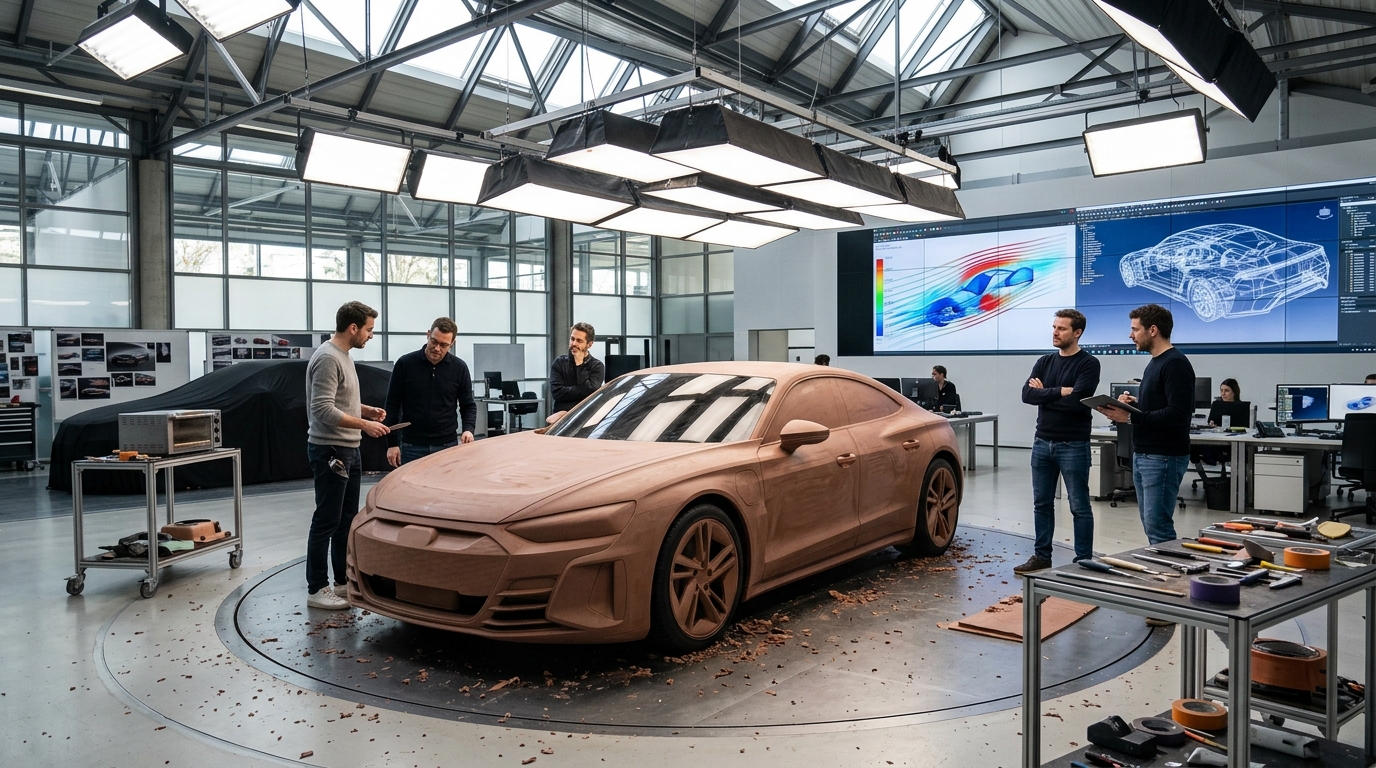
Jaguar created a dedicated Jaguar Electrical Architecture, or JEA, for the Type 01. The company says the architecture was necessary because an existing platform could not deliver the intended silhouette.
This is significant. Platform sharing has become normal across the automotive industry because it reduces development costs. Yet shared platforms can also create common proportions across very different brands.
Jaguar chose another direction. It treated the platform as part of the design process.
A Long Bonnet No Longer Needs an Engine to Justify It
In a traditional Jaguar, a long bonnet made mechanical sense. Large combustion engines needed physical space ahead of the cabin.
An electric GT does not have the same requirement.
That makes the Type 01’s bonnet an intentional visual decision rather than a direct result of powertrain packaging.
At first, this may seem inefficient. Yet automotive architecture has never been shaped only by practical necessity. Proportion communicates identity before a driver understands any technical specification.
The Type 01 uses its bonnet to create distance, elegance, and visual tension. It recalls classic grand touring cars without copying one specific historical model.
This raises an interesting question for future EV design. Once combustion packaging disappears, should designers abandon the forms it created?
Jaguar’s answer appears to be no. Familiar proportions can survive when they still carry emotional meaning.
A similar issue appears in our BMW M Concept Neue Klasse design analysis. BMW also faces the challenge of translating a familiar performance identity into an architecture that no longer depends on the same mechanical components.
Aerodynamics Are Hidden Inside the Monolithic Form
The dramatic shape would matter less if it created poor aerodynamic performance.
Jaguar says the Type 01 achieves a drag coefficient of 0.23, making it the most aerodynamic Jaguar the company has produced.
That number is notable because the car does not visually present itself as an aerodynamic exercise.
Many highly efficient EVs use obvious teardrop forms, smooth fastback roofs, and simplified body shapes. The Type 01 instead looks broad, long, and almost architectural.
Active aerodynamic systems help make that possible.
Jaguar uses active vanes and a three-stage deployable rear spoiler to manage airflow. The company also spent years refining the body in simulation and wind tunnels.
This represents a larger change in automotive design. Aerodynamics no longer has to appear as a visible style.
Modern computation, active surfaces, and earlier engineering feedback let designers integrate airflow into a more distinctive form.
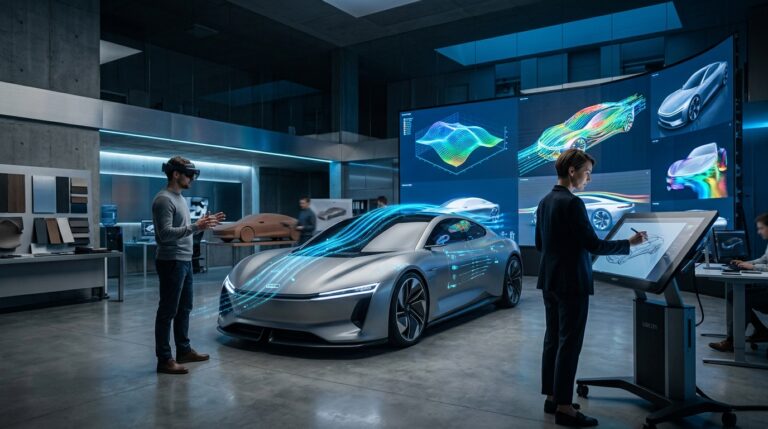
That connects with a wider 2026 trend. Automotive studios increasingly use digital simulation much earlier in the creative process. Our guide to AI and software-defined automotive design studios explores how those tools are changing decisions before physical prototypes even exist.
The Interior Treats the Car Like a Small Architectural Space
The architectural connection becomes even clearer inside.
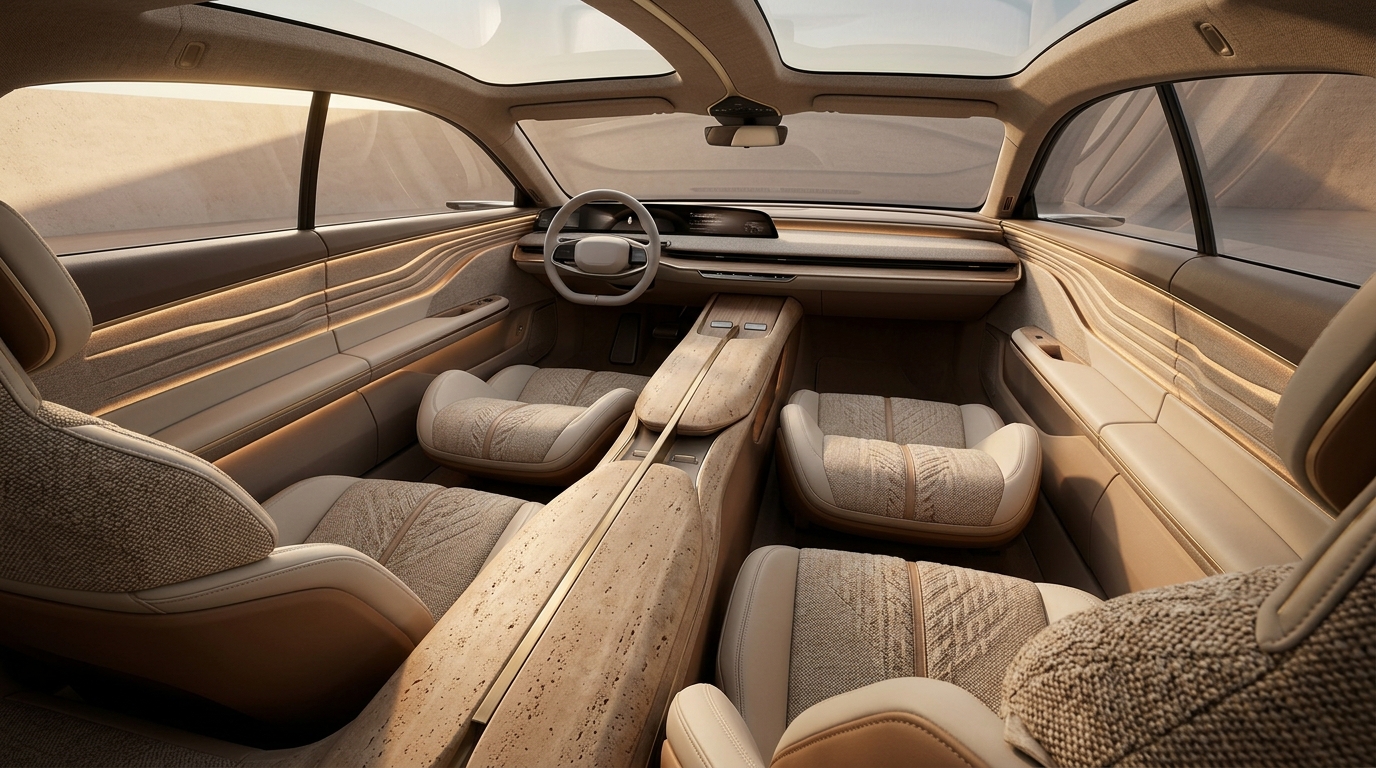
Instead of organizing the cabin around one large dashboard screen, Jaguar created a full-length central spine that runs through the passenger compartment.
The element divides the interior into four defined seating zones.
This creates an unusual sense of personal territory. Rather than one shared open cabin, each occupant sits within a more individual space.
That approach is closer to interior architecture than conventional dashboard styling.
The Central Spine Turns Four Seats Into Four Individual Rooms
Automotive interiors are extremely small spaces, yet they face many of the same questions as architecture.
Where does the eye travel? How are spaces divided? Which materials are touched first? How does light change a surface? How private or exposed does each occupant feel?
The Type 01 makes those questions unusually visible.
Its central spine emphasizes the length of the vehicle while separating each seat. Jaguar describes the result as four individual spaces rather than simply a four-seat cabin.
The low driving position also changes the sense of scale. Occupants sit deeper within the body, while the high surrounding surfaces create a more enclosed environment.
Technology is present but is not intended to dominate every surface. Jaguar integrates digital controls into a relatively slim dashboard and uses hidden-until-needed features in other areas.
That restraint is important.
Luxury EV cabins have sometimes become competitions over display size. Jaguar is instead trying to create value through spatial composition, materials, and atmosphere.
That same direction appears in the highest levels of personalization. Our article on bespoke cars becoming rolling architecture looks at how luxury manufacturers increasingly treat cabins like commissioned interiors rather than equipment packages.
What the Type 01 Says About the Future of Automotive Design
The Type 01 matters because it shows one possible path beyond the first generation of electric-car design.
Early EVs often needed to communicate that they were technologically different. Smooth grilles, unusual wheels, blue accents, giant screens, and futuristic graphics became common visual signals.
Those cues are becoming less necessary as electrification becomes normal.
The next design challenge is harder. Brands need to create electric vehicles that are recognizable without depending on the same engine, exhaust, grille, and drivetrain layouts that shaped their past.
Jaguar is attempting to solve that problem through proportion, architecture, light, and material.
Future EVs May Be Defined More by Space Than by Powertrain
The technical numbers remain impressive. Jaguar lists up to 1,030 PS, acceleration from 0 to 62 mph in as little as 3.2 seconds, and market-dependent range figures reaching roughly 450 miles.
Those figures will attract attention, but they may not be the Type 01’s most lasting contribution.
Electric performance is becoming easier for manufacturers to deliver. Very high power and rapid acceleration no longer guarantee a unique identity.
Design therefore has to carry more of the emotional burden.
The Type 01 does this by treating the battery platform as a foundation for a particular spatial experience.
Exterior proportion creates the first impression. The cabin architecture continues the same longitudinal theme. Material choices then give the interior another layer of identity.
Travertine, Textiles and Light Replace Traditional Luxury Signals
Jaguar says the interior palette draws inspiration from travertine stone and artisan textiles.
That language is important because it moves the reference point away from conventional automotive luxury.
Leather, polished wood, and metal have defined expensive car interiors for decades. Those materials remain relevant, but designers are now borrowing more openly from architecture, furniture, fashion, and hospitality.
A stone-inspired tonal palette creates a different mood from a traditional glossy luxury cabin. Textiles can introduce softness and acoustic character. Metal can work as an architectural line rather than simple decoration.
Light becomes another material.
The Type 01’s exterior also uses lighting as part of its identity. Slim front lamps and full-width rear lighting sit within Jaguar’s new graphic language rather than imitating a conventional grille-and-lamp arrangement.
This may become increasingly common as electric platforms remove familiar mechanical signatures.
A future luxury vehicle may be recognized less by the shape of an intake and more by its illuminated graphics, interior spatial organization, material palette, and digital behavior.
The Jaguar Type 01 2026 therefore represents more than a radical redesign of one British marque.
It demonstrates what can happen when an automaker develops architecture around a design idea instead of adapting the idea to an existing platform.
The long bonnet does not need an engine beneath it to have meaning. The aerodynamic body does not need to look like a wind-tunnel experiment. The electric interior does not need to become a wall of screens.
Jaguar has instead created a vehicle around proportion, spatial drama, material atmosphere, and strong visual identity.
Whether customers accept the brand’s transformation will become clearer after orders open and production begins in 2027. That commercial question remains separate from the design achievement.
From an architectural perspective, the Type 01 is already valuable as a case study.
It suggests that the most interesting electric cars may not be those that look the most futuristic. They may be the ones that use new engineering freedom to create a stronger sense of place, identity, and experience.
For official specifications, design details, and production information, see the Jaguar Type 01 official media release.