Automotive technology is advancing faster than ever. Electric powertrains deliver instant torque, software can adjust vehicle behavior in milliseconds, and increasingly sophisticated driver-assistance systems are changing the relationship between people and machines. Yet one of the most visible automotive trends of 2026 is moving in the opposite direction.
Manual gearboxes, naturally aspirated engines, mechanical steering and deliberately analogue interfaces are appearing in some of the year’s most desirable enthusiast cars. Monterey Car Week 2026 made the contrast particularly clear. Alongside advanced electric concepts such as the BMW M Concept Neue Klasse and Acura NEXERA Vision stood machines that celebrated physical controls, mechanical sound and direct interaction.
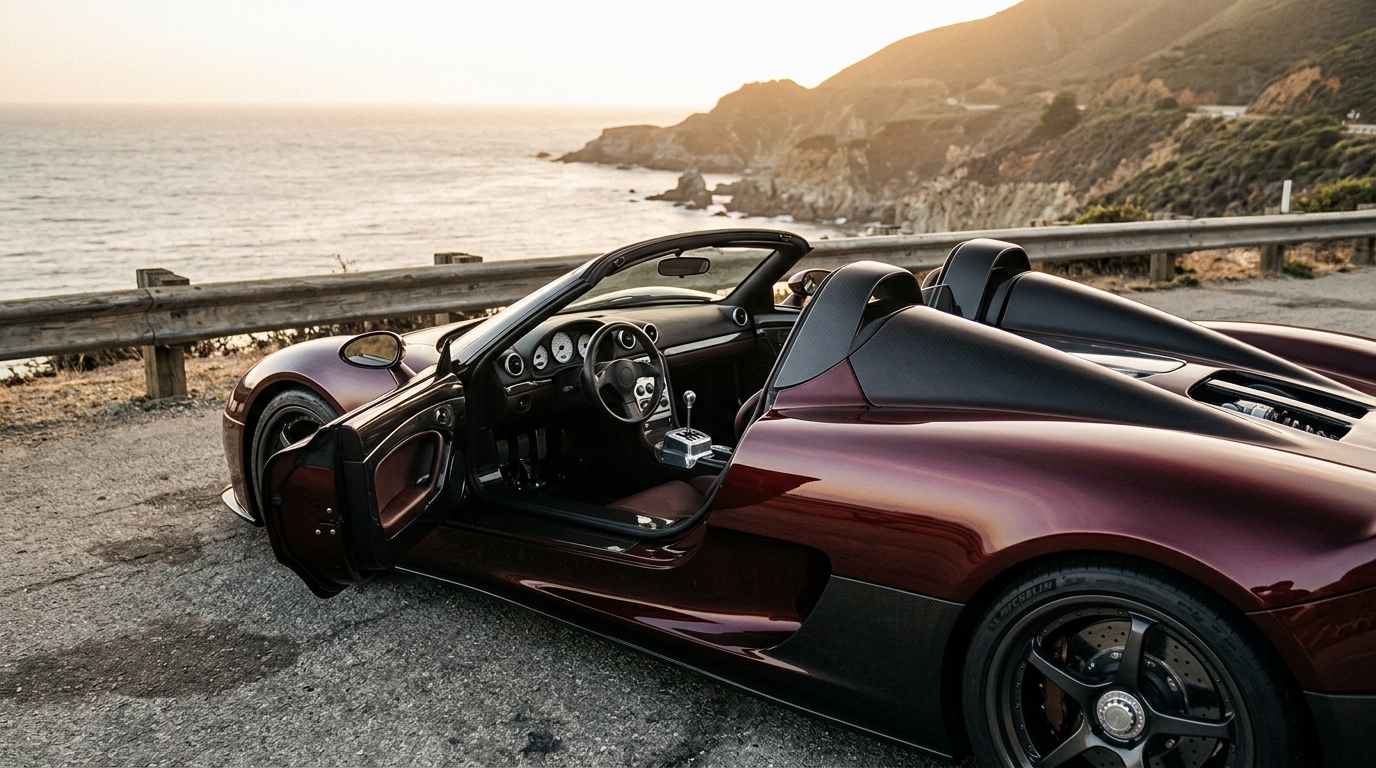
The Eccentrica V12 Roadster arrived with a gated manual gearbox and naturally aspirated V12. Gordon Murray Special Vehicles introduced the S1 with a manual transmission and high-revving Cosworth V12. Porsche responded to enthusiast demand by returning a six-speed manual to the 911 Carrera S in North America.
This does not mean the automotive industry is reversing electrification. Instead, analogue interaction is becoming more valuable precisely because it is becoming less common. As explored in our Monterey Car Week 2026 design trends, modern automotive culture is becoming less about choosing between old and new and more about creating vehicles with a clear identity.
Why Analogue Driving Is Becoming Valuable Again in 2026
For decades, performance development followed a relatively straightforward direction: make gear changes faster, steering easier, engines more powerful and electronic systems more capable. Automatic and dual-clutch transmissions became objectively quicker than manuals. Electric motors eliminated the need for conventional gear changes altogether. Electronic steering made it possible to integrate increasingly complex safety and assistance systems.
But optimizing every measurable function can remove some of the interaction drivers once enjoyed. The manual transmission is slower than a modern performance automatic in most situations, yet operating it requires timing, coordination and judgment. Hydraulic steering may demand more effort, but the driver can feel changes in road texture and load. A naturally aspirated engine may deliver less low-end torque than an electrified drivetrain, but its response and sound change continuously with engine speed.
Those characteristics are no longer limitations that manufacturers must always eliminate. In a small but influential part of the market, they are becoming the product.
Manual Gearboxes Are Returning as Deliberate Luxury
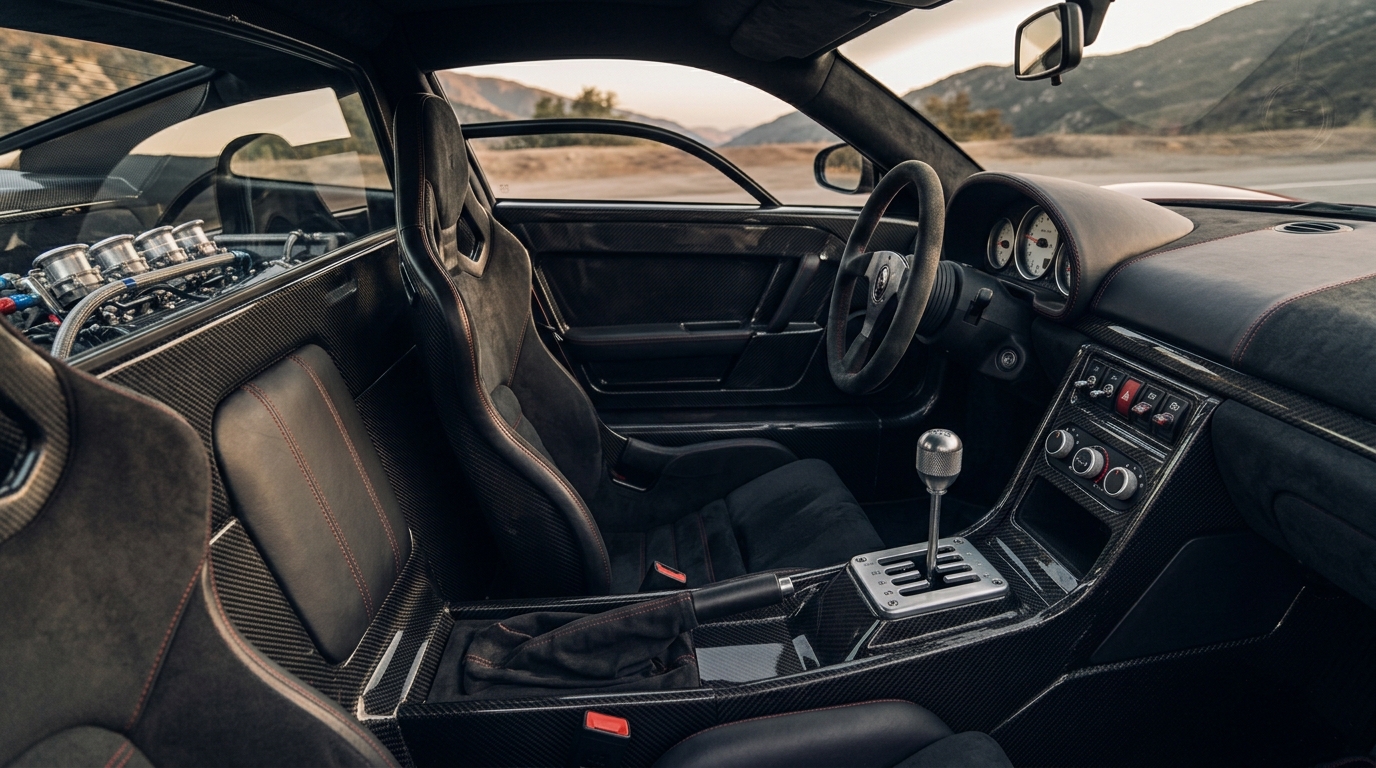
The manual gearbox used to be the inexpensive transmission choice. Today, in the highest-end enthusiast cars, it can represent something very different: scarcity, participation and mechanical authenticity.
That reversal says a great deal about how the meaning of luxury is changing. Luxury does not always mean removing effort. Sometimes it means preserving an experience that mass-market technology has made unnecessary.
Porsche’s Carrera S Manual Shows the Demand Extends Beyond Hypercars
Porsche’s decision at Monterey Car Week 2026 is an important example because it involves a recognizable production sports car rather than an ultra-low-volume collector machine. The company introduced a manual-transmission package for the 911 Carrera S specifically for the United States and Canada.
Porsche said the six-speed manual was returned in response to strong and sustained enthusiast demand. The rear-wheel-drive Carrera S retains its twin-turbocharged flat-six while pairing the manual gearbox with performance hardware including rear-axle steering, Sport Chrono and PASM Sport suspension.
The significance is not simply that another manual Porsche exists. It demonstrates that buyers still differentiate between maximum performance and maximum involvement. A faster shift does not automatically create a more memorable drive.
This fits naturally within the world of garage culture. Enthusiast cars increasingly coexist with highly capable daily vehicles. A collector may use an electric SUV or automated luxury sedan every day while deliberately choosing a manual sports car when driving itself is the activity.
Gordon Murray’s S1 Turns the V12 and Manual Into the Entire Product Philosophy
Gordon Murray Special Vehicles took the idea considerably further with the S1, revealed at The Quail during Monterey Car Week 2026. The car uses a bespoke 4.2-liter naturally aspirated Cosworth V12 producing up to 690 PS and revving to 12,100 rpm, paired with a real manual gearbox.
The company describes the S1 as analogue and deeply driver-focused but also refined enough for long-distance touring. That balance matters. Analogue design does not require recreating an uncomfortable historical sports car. Modern engineering can improve structure, aerodynamics, suspension and reliability while intentionally retaining the interactions that create emotional value.
This is essentially selective modernization. Engineers use contemporary technology everywhere it improves the experience without allowing technology to erase the experience itself.
The V12 Has Become an Emotional Design Object
A large naturally aspirated engine is increasingly difficult to justify through efficiency alone. Electrified powertrains can produce extraordinary power with less mechanical complexity from the driver’s perspective. Yet the V12 continues to appear in highly exclusive automotive projects because its value extends beyond output.
An engine influences packaging, exterior proportion, cooling, sound, interior vibration and even the ritual of starting a car. For designers, it is not simply machinery hidden under bodywork. It can shape the entire personality of the object.
The Eccentrica V12 Roadster Turns Mechanical Interaction Into Sculpture
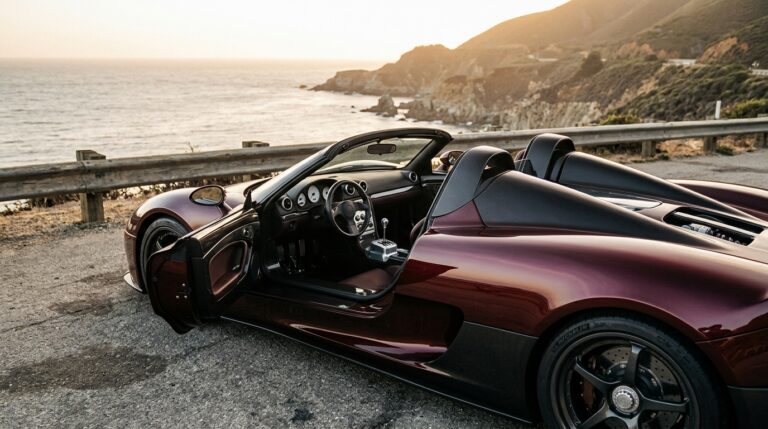
The Eccentrica V12 Roadster may be one of the clearest expressions of this philosophy in 2026. Based on a first-series Lamborghini Diablo, the vehicle is comprehensively re-engineered with more than 3,500 new components and a full carbon-fiber body.
At its center is a naturally aspirated 5.7-liter V12 connected to a gated manual gearbox. Hydraulic steering is retained specifically to preserve road feedback. The roof is removed, increasing the driver’s exposure to the engine, environment and airflow.
None of those decisions makes the vehicle easier to operate. That is precisely the point. The architecture of the car is designed around sensation.
The exposed mechanical character also affects its visual language. Leather and Alcantara appear where occupants physically interact with the car, while exposed carbon communicates structure and lightness. Only 19 examples are planned, with owners able to move beyond the standard configuration catalogue.
The project therefore connects analogue driving with the growth of highly personalized automotive design discussed in our feature on why bespoke cars are becoming rolling architecture. Mechanical interaction and bespoke craftsmanship are increasingly becoming two sides of the same luxury proposition.
Why the Analogue Revival Is Really About Design, Not Nostalgia
It would be easy to dismiss this trend as wealthy collectors trying to recreate the past. That explanation is incomplete. Many of the most interesting analogue cars appearing in 2026 use advanced materials, computational aerodynamics, modern electronics and sophisticated manufacturing methods that would have been impossible during the eras they reference.
The goal is not to return automotive engineering to 1995. It is to decide which elements of 1995 were emotionally valuable and rebuild them with contemporary capability.
Analogue Cars Are Becoming Curated Automotive Artifacts
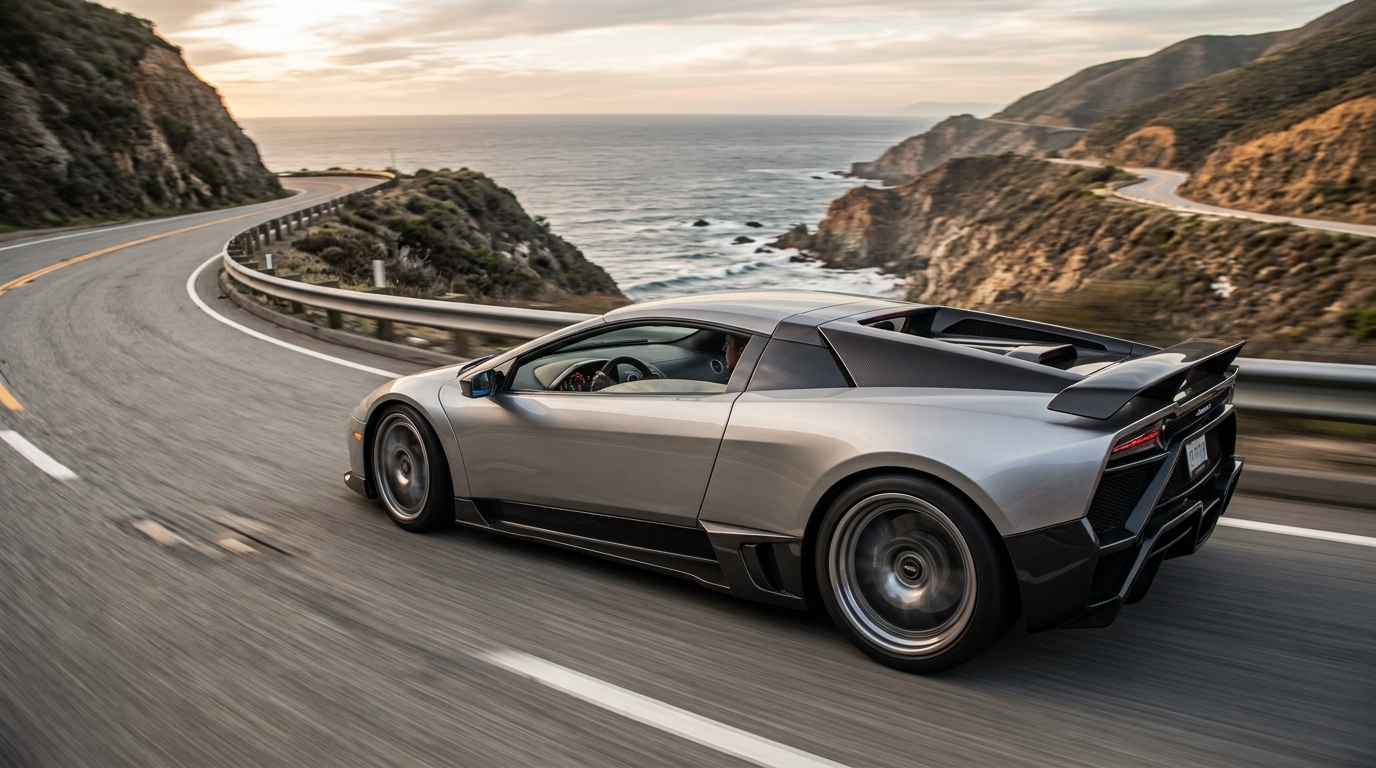
The Ken Okuyama Kode89 displayed at Pebble Beach provides another example. The lightweight mid-engine concept combines an aluminum space frame and carbon-fiber skin with a naturally aspirated V12 and manual transmission. Spyker’s C8 Preliator XXV takes a similarly deliberate approach, rejecting hybrid propulsion while emphasizing hand-built aluminum construction and craftsmanship.
These cars occupy a different role from mainstream transportation. Their production numbers are small, their design processes unusually personal and their reason for existing primarily emotional.
That changes how we should evaluate them. The relevant question is not whether a manual gearbox can shift faster than a dual-clutch transmission. It cannot. The question is whether the act of shifting is part of the experience the vehicle was designed to deliver.
Interaction Is Becoming Part of Exclusivity
As technology makes transportation easier, interaction itself can become scarce. A gated shifter requires the driver to move a physical mechanism. A naturally aspirated engine rewards choosing the right gear. Mechanical steering communicates information through the driver’s hands. An open cockpit allows sound and air to become part of the experience.
These are forms of friction, but carefully chosen friction can create meaning. The same idea exists in other design disciplines. Mechanical watches survive despite smartphones keeping more accurate time. Vinyl records survive despite streaming being more convenient. Handmade furniture remains desirable despite industrial production being faster.
The object becomes valuable partly because using it asks something from its owner.
This is where the analogue revival becomes relevant to automotive design culture. Designers are reconsidering the assumption that technological progress always requires hiding complexity from the user. In certain enthusiast products, exposing the right mechanisms can strengthen emotional connection.
Materials reinforce that effect. A machined metal gear lever communicates differently from a touchscreen icon. A physical switch has weight, travel and resistance. Leather develops patina. Exposed carbon reveals structure. Even the visible alignment of fasteners can communicate craftsmanship.
future car
The growing market for these vehicles also creates opportunities for specialist manufacturers, restoration engineers, fabricators and craftspeople. Many belong in the broader ecosystem represented by the cars.archi automotive specialists directory. Creating a modern analogue car often requires expertise that mass manufacturing has largely moved away from.
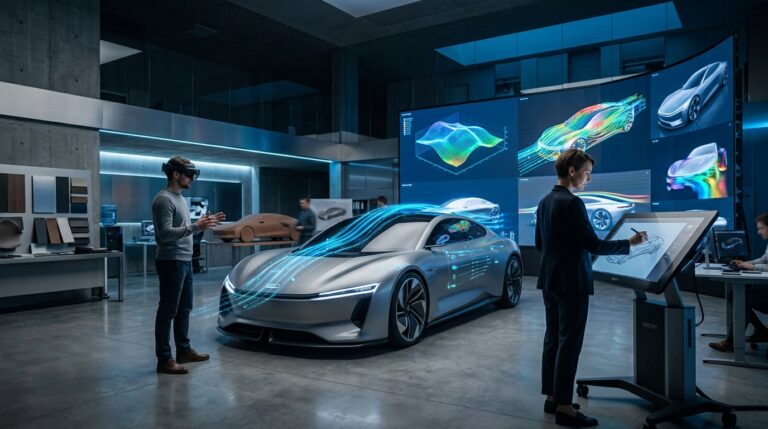
None of this suggests electric or software-defined cars lack emotion. The BMW M Concept Neue Klasse demonstrates how electrification can create an entirely different kind of performance experience. The interesting development is that the market appears capable of supporting both directions.
One future car may use four electric motors and software to adjust torque at every wheel. Another may use a V12, hydraulic steering and a gated shifter. Both can represent sophisticated automotive design if every decision serves a coherent purpose.
That is why the return of analogue emotion matters in 2026. It is not evidence that the automotive industry has rejected the future. It shows that designers are becoming more deliberate about deciding which parts of driving deserve to survive technological change.
When speed becomes easy to produce and software becomes universal, involvement can become the rare commodity. A manual gearbox, responsive engine or mechanical steering system stops being outdated hardware and becomes a carefully selected interface between a person and a machine.
The most desirable analogue cars of 2026 therefore succeed not because they imitate the past, but because they understand why certain experiences from the past still matter.
For an official look at one of the clearest examples, visit the Pebble Beach Concours d’Elegance overview of the Eccentrica V12 Roadster.