Automotive design studios are entering one of their biggest workflow changes since digital modeling replaced much of traditional hand drafting. In 2026, artificial intelligence is moving beyond experimental image generation and into practical stages of vehicle development, while software-defined vehicles are changing what designers are actually being asked to create.
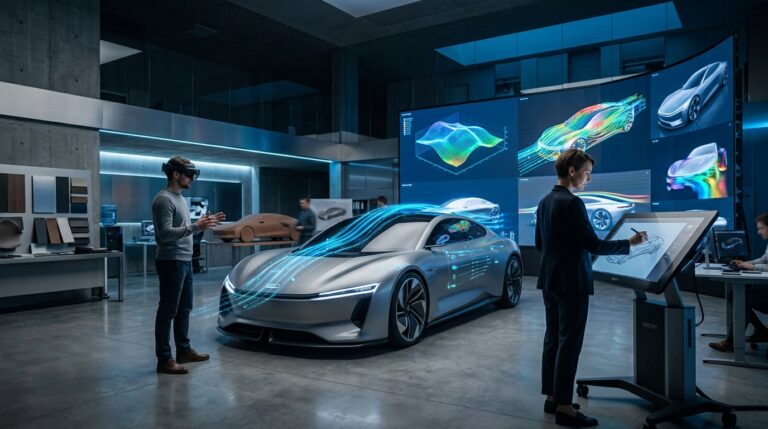
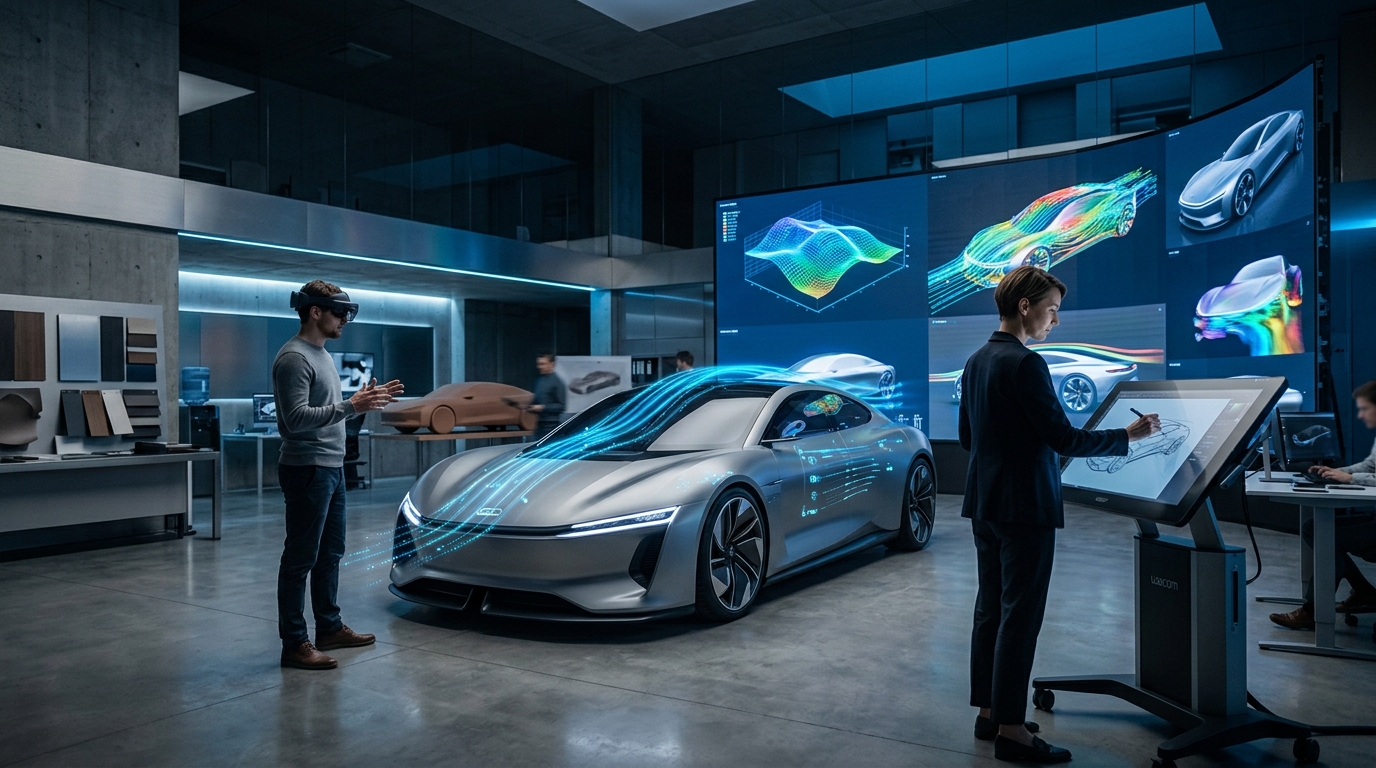
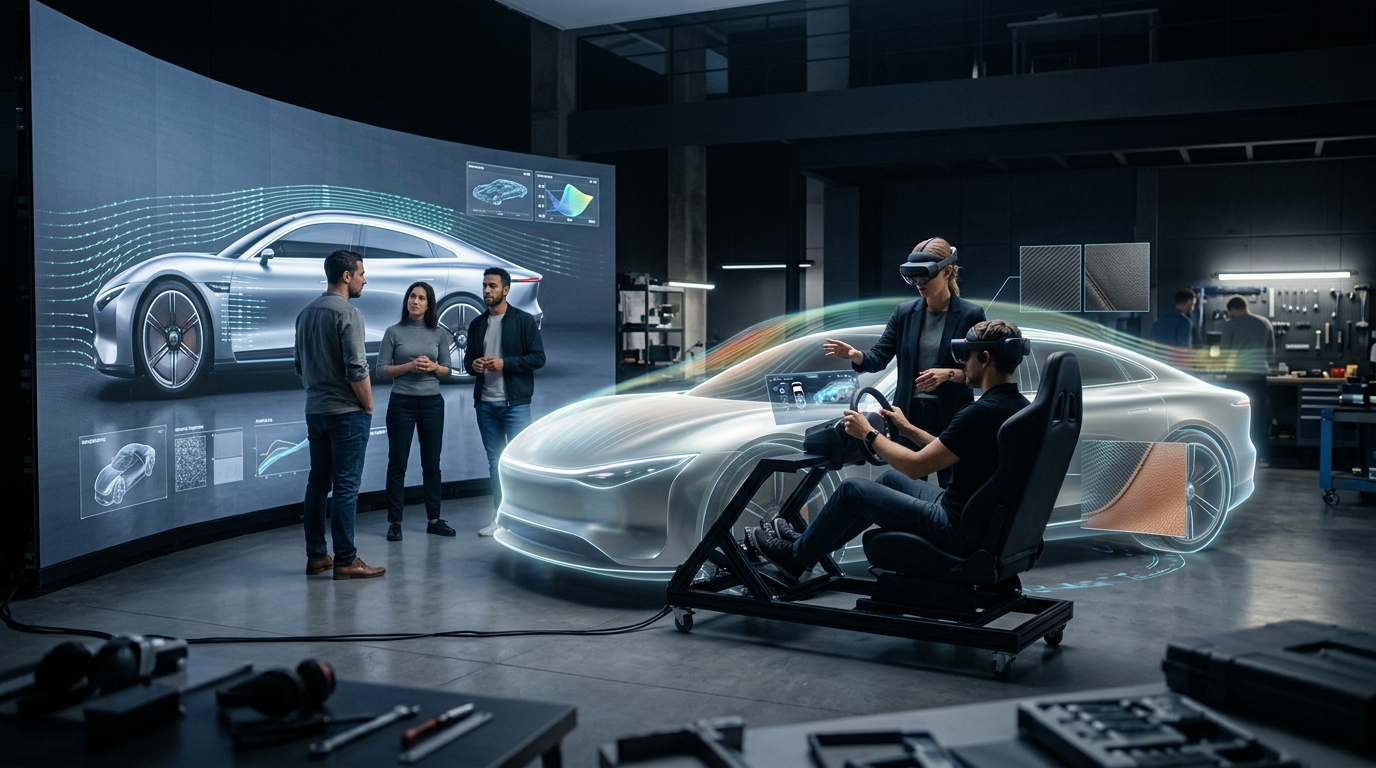
A designer may still begin with proportion, stance and surface, but the process surrounding that work is becoming increasingly connected. AI-assisted tools can move an early sketch toward three-dimensional geometry faster. Predictive simulation can introduce aerodynamic information before the exterior is frozen. Digital twins can give designers, engineers and executives access to the same evolving vehicle model, while mixed-reality reviews allow teams in different locations to evaluate a design at full scale.
At the same time, the vehicle itself is changing. Centralized computing, connected software, artificial intelligence and over-the-air updates mean that a car’s identity can no longer be defined by sheet metal and interior materials alone. Lighting behavior, displays, interfaces, driver assistance and personalized digital experiences are becoming part of automotive design.
For automotive design studios, this creates a major shift: the future designer is not simply creating an object. Increasingly, the studio is helping define a physical, digital and behavioral system.
AI Is Compressing the Traditional Automotive Design Process
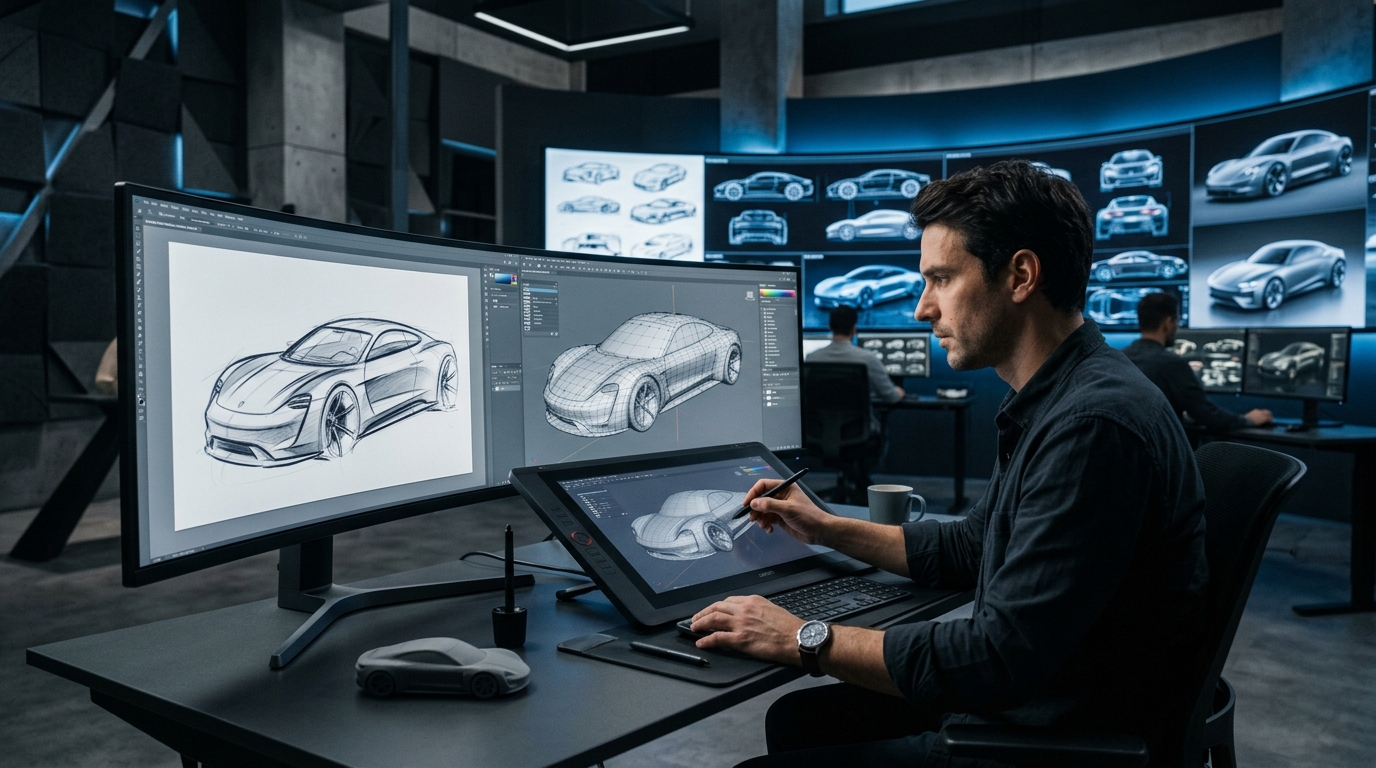
Vehicle development has always involved iteration. Designers sketch, create digital models, review proportions, refine surfaces, work with engineers, evaluate aerodynamics and eventually move toward production-ready geometry. The problem is that each handoff takes time, and a discovery made late in development can force expensive rework.
That pressure is becoming more intense as manufacturers attempt to launch vehicles faster while dealing with electrification, new regulations, sustainability requirements and increasingly demanding customers. Autodesk identified development-cycle compression as one of the central themes affecting automotive studios in 2026.
From Sketch to Editable 3D Form Is Getting Dramatically Faster
One of the clearest changes is happening during the earliest stages of form exploration. Traditionally, a designer could create an appealing sketch or rendering quickly, but turning that image into useful three-dimensional geometry required another stage of modeling before the team could accurately judge wheelbase, overhangs, roof height and overall volume.
AI-assisted workflows are reducing that gap. Autodesk’s 2026 Canvas to Mesh workflow for Alias, for example, can use sketches, renderings and other visual references to generate proportionally scaled three-dimensional meshes inside a defined dimensional envelope.
AI Can Generate Options Faster Without Replacing Design Judgment
The value of this technology is not that an algorithm suddenly becomes the automotive designer. Its more practical role is eliminating some of the repetitive setup between an idea and the point where a designer can evaluate it properly.
If the first useful three-dimensional model appears in hours rather than days, a studio can investigate more alternatives before committing to one direction. Designers can compare rooflines, change wheelbase emphasis, test overhangs and evaluate stance while the project is still flexible.
This could be particularly valuable for the kind of early exploration seen in concept car design. Instead of spending a large portion of the early program simply constructing enough geometry to hold a review, designers can spend more time asking whether a particular proportion actually expresses the intended character.
There is an important distinction, however. AI-generated geometry is not automatically production-ready Class-A surfacing. Professional automotive design still requires experienced modelers and surface specialists who understand reflections, continuity, manufacturing requirements and design intent. The technology shortens the road to meaningful evaluation; it does not eliminate the craftsmanship at the end of it.
Engineering Feedback Is Moving Earlier Into the Creative Stage
Another major change is that designers increasingly do not have to wait until late engineering reviews to understand how a shape performs.
Real-time aerodynamic feedback and predictive AI can provide simulation-like information while a design is still being developed. That means airflow can become part of the creative process rather than arriving later as a constraint that forces designers to change an already-approved shape.
This has major implications for electric vehicles. Aerodynamic efficiency directly affects energy consumption and range, so exterior form is increasingly connected to powertrain efficiency. Our analysis of the BMW M Concept Neue Klasse showed how functional aerodynamics and electric architecture are already becoming visible parts of performance-car identity.
When engineering insight moves upstream, the relationship between designer and engineer also changes. Rather than one discipline creating something and another discipline correcting it, both can influence the vehicle earlier. The strongest design may emerge from that interaction instead of surviving despite it.
Digital Twins and Mixed Reality Are Changing the Design Review
The traditional automotive design review can involve physical clay models, large displays, renderings and groups of decision-makers physically gathering in the studio. Those methods remain important, but digital twins and immersive visualization are making reviews more continuous and geographically flexible.
Autodesk described a 2026 workflow built around a continuously updated digital twin containing vehicle geometry, engineering information, realistic materials, lighting, variants and even mechanical behavior. Instead of multiple departments working from disconnected representations, the goal is a common digital model that reflects the latest decisions.
A Shared Digital Vehicle Can Reduce the Cost of Late Decisions
A digital twin becomes useful when it behaves like more than a photorealistic rendering. A team can inspect how a door opens, evaluate an interior from the occupant’s perspective, change materials, compare variants or examine a vehicle in realistic environmental conditions before a physical prototype exists.
At AIF 2026, Renault and Granstudio also demonstrated how mixed-reality workflows can connect a physical seating or cockpit rig to a digital vehicle model. This allows designers to experience virtual geometry while maintaining real physical reference points.
NVIDIA highlighted a related direction at GTC 2026, where Rivian presented work involving a real-time digital twin for rapid automotive engineering design. Together, these developments suggest that visualization is becoming part of development itself rather than simply the polished presentation at the end.
For globally distributed design teams, this can also change collaboration. A designer in one country, an engineer somewhere else and an executive in another office can review the same vehicle state rather than waiting for travel, physical prototypes or separately prepared presentations.
Software-Defined Vehicles Are Changing What Automotive Designers Actually Design
AI is transforming the design process, but software-defined vehicles are transforming the finished product. This may ultimately be the more significant change.
Traditional vehicle architecture relied on many separate electronic control units responsible for individual functions. The industry is increasingly moving toward more centralized computing architectures capable of managing multiple vehicle domains. Qualcomm’s automotive developments in 2026 illustrate this direction, including platforms that can combine cockpit systems, driver assistance, connectivity and body functions within more unified computing environments.
The result is a car in which software has greater influence over how features operate and how users experience the vehicle.
The Designer’s Canvas Now Includes Behavior, Interfaces and Intelligence
Consider exterior lighting. In the past, a lamp was primarily a physical object designed into the body. Increasingly, lighting can also become programmable communication. The Acura NEXERA Vision, for example, uses concealed lighting as a major element of its future brand identity.
Now apply the same thinking to the entire cabin. Displays can change according to driving mode. Ambient lighting can respond to vehicle states. Digital assistants can adapt to occupants. Driver-assistance systems need understandable visual and audible communication. Features can change through software updates after the vehicle leaves the factory.
The automotive designer therefore has to think about states and transitions, not only static appearance.
Future Cars Will Be Designed as Experiences That Continue to Evolve
Qualcomm has described the industry’s progression from software-defined toward AI-defined vehicles, where artificial intelligence can increasingly influence personalization and interactions. That does not make industrial design less important. It makes coordination more important.
A beautifully designed dashboard can fail if the software interface is confusing. An elegant lighting signature can become irritating if its animations are excessive. An intelligent assistant may be technically impressive but still feel poorly designed if its voice, timing and behavior do not fit the character of the vehicle.
This creates a much wider definition of automotive design. Exterior designers, interior designers, UX specialists, visualization teams, engineers, software developers, material designers and brand strategists increasingly need to work from the same idea of what the vehicle should feel like.
It also explains why the boundary between automotive design and the wider design culture is becoming more interesting. Cars are starting to combine disciplines previously associated with product design, architecture, interface design, animation and software development.
AI will accelerate many parts of that process. It can create variations, automate repetitive operations, surface engineering information and help teams search larger design spaces. But generating more possibilities does not automatically create better cars.
intellectual property
In fact, the opposite risk exists. If every studio gains access to similar generative technologies, producing visually impressive concepts becomes easier. Distinction then depends even more heavily on judgment: knowing which idea fits the brand, which proportion has lasting value, which interaction deserves to exist and which technological feature should remain invisible.
This is why human designers may become more important rather than less important. Their value shifts away from manually completing every repetitive step and toward direction, editing, taste and decision-making.
There are also practical questions around intellectual property, training data and confidentiality. Automotive designs are commercially sensitive long before the public sees them. Enterprise AI workflows therefore need to protect proprietary geometry and design information. Autodesk, for example, states that its automotive Form Explorer workflow keeps generated meshes within the customer’s environment and does not use customer data to train Autodesk models.
That type of governance will be essential if AI is going to become normal inside professional studios rather than remaining an experimental side tool.
The automotive studio of 2026 is therefore not disappearing into artificial intelligence. It is becoming more connected. Sketching moves more quickly into 3D. Simulation moves earlier into design. Visualization becomes a shared digital prototype. Mixed reality makes scale and context available sooner. Software-defined architectures expand the designer’s responsibility from physical form into behavior and digital experience.
The winning studios will probably not be the ones that generate the most AI images or automate the largest number of tasks. They will be the ones that use these tools to create more time for the decisions that machines still struggle to make: what a brand should represent, what an object should feel like, and which ideas deserve to become real.
For a detailed official look at these 2026 workflow changes, see Autodesk’s AIF 2026 Design Studio keynote on AI, digital twins and faster automotive development.