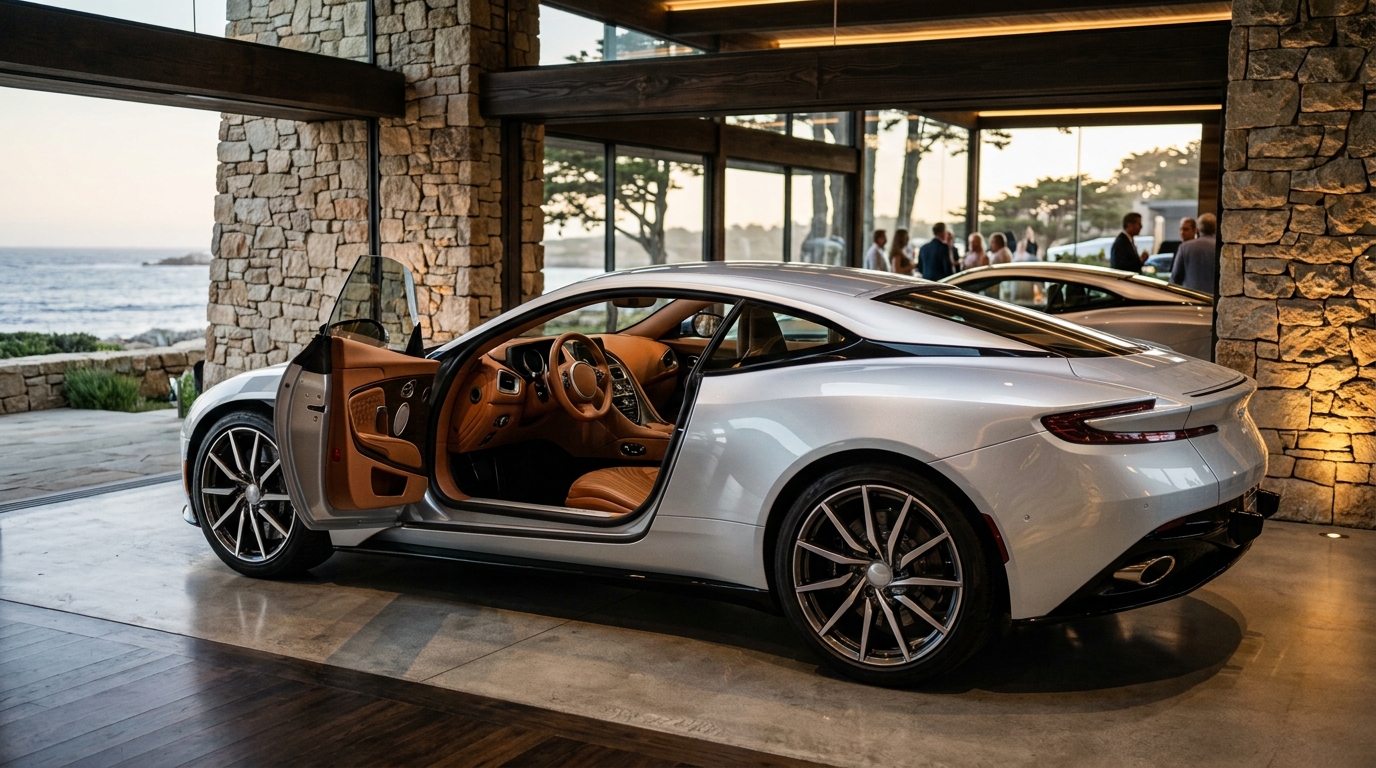
The BMW M Concept Neue Klasse is important for reasons that go far beyond electrification. It represents BMW M trying to answer one of the most difficult questions facing performance-car designers in 2026: what should an M car look and feel like when the mechanical ingredients that shaped the brand for decades are fundamentally changing?
BMW unveiled the fully electric concept at the 24 Hours of Le Mans before bringing it to Monterey Car Week 2026 for its North American debut. That choice of venues was deliberate. Both environments connect BMW M to racing history, yet the vehicle being presented points toward a future built around four electric motors, sophisticated vehicle-control software, an 800-volt electrical system and a large high-voltage battery.
The concept therefore sits between two worlds. It must communicate recognizable BMW M character while taking advantage of an electric architecture that no longer needs to follow many of the packaging conventions associated with combustion-powered performance cars.
For anyone following future mobility or the changing language of concept car design, the M Concept Neue Klasse offers a particularly revealing case study. It shows that the electric-performance era may not eliminate traditional brand identity. Instead, it could force designers to identify which parts of that identity actually matter.
Why the BMW M Concept Neue Klasse Is More Than an Electric M Car
Performance vehicles have traditionally communicated capability through visible mechanical clues. Large cooling openings, exhaust outlets, long hoods, transmission tunnels and engine-related proportions all helped determine how a high-performance car looked. Electrification changes that relationship between engineering and form.
That does not mean function disappears. It means the functions change. Battery cooling, aerodynamic efficiency, brake management, downforce, thermal control and high-speed stability become increasingly important design inputs. BMW’s concept makes those requirements visible without turning the car into an anonymous aerodynamic object.
The timing is also significant. Monterey Car Week 2026 highlighted several competing directions in automotive design, from advanced electrification to highly bespoke craftsmanship and renewed interest in analogue driving experiences. As discussed in our automotive design trends from Monterey Car Week 2026, the strongest new vehicles are increasingly distinguished by how clearly they express identity rather than by simply appearing futuristic.
A New Exterior Language Still Has to Look Like BMW M
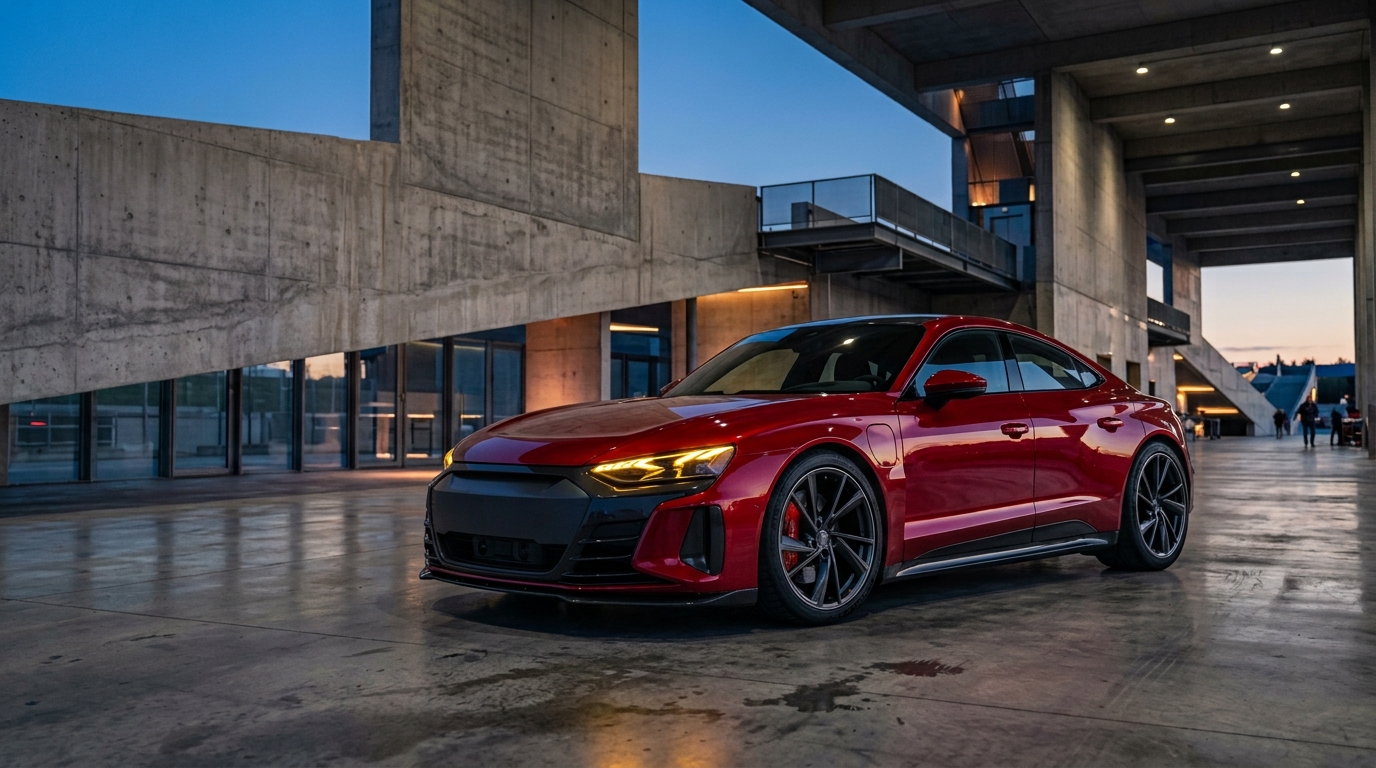
BMW describes the concept through powerful proportions, precise lines, wide wheel arches and a muscular shoulder section. Those elements matter because an electric drivetrain alone does not communicate the emotional promise associated with an M product. Stance still has to suggest traction, agility and performance before the vehicle moves.
Instead of covering the body with unnecessary decoration, the concept uses relatively clean surfaces combined with highly graphic functional elements. The result suggests a broader direction for performance EVs: visual aggression may come less from adding vents and more from controlling proportion, aero surfaces, lighting and stance.
The Shark Nose and M Yellow Lights Create Recognition Without a Conventional Grille
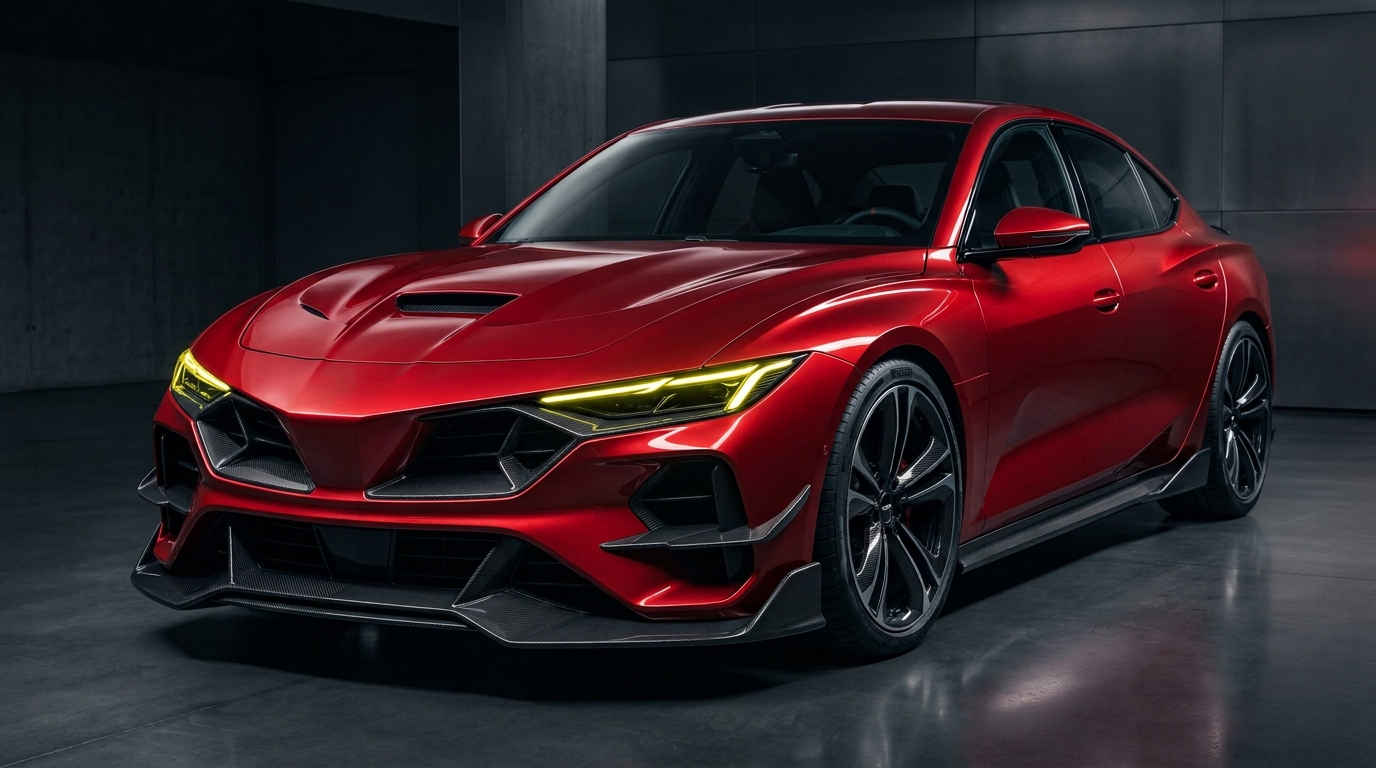
The front end illustrates the problem especially well. Electric cars do not require the same open grille area as combustion vehicles, yet the BMW kidney graphic remains one of the company’s strongest identifiers. On the M Concept Neue Klasse, the headlights and kidney area are combined into a unified graphic rather than treated as separate conventional components.
A forward-leaning shark nose adds visual tension, while BMW’s new M Yellow Lights connect the concept with motorsport. BMW says the yellow-light icons are intended to become a signature of future M automobiles and reference GT racing as well as the BMW M Hybrid V8.
This is an important design strategy. When mechanical elements disappear, lighting can inherit some of their branding role. A recognizable illuminated graphic works both during the day and at night, giving future cars a stronger digital-era identity without depending entirely on decorative bodywork.
Aerodynamic Elements Are Becoming Part of the Visual Architecture
The concept’s aerodynamic treatment is equally revealing. Its front bumper uses what BMW calls a trimaran design inspired by high-speed sailing boats. The three-part composition supports the front splitter while giving the lower section of the car a technical, structured appearance.
Three-dimensional Track Lights appear in the outer sections and are repeated at the rear, creating visual continuity between the two ends of the vehicle. The rear also incorporates a floating diffuser and pronounced ducktail spoiler. These are not simply styling accessories: BMW specifically links the spoiler to improved aerodynamics and increased rear-axle downforce.
Natural-fiber materials are used in the splitter, hood air outlet and diffuser. Their appearance also suggests another shift in performance design. Carbon fiber has long functioned as a visual shorthand for speed and expense, but future high-performance vehicles may develop a broader material vocabulary driven by weight, sustainability and manufacturing innovation.
Electric Architecture Changes What Performance Designers Can Control
The most consequential aspect of the concept is beneath its bodywork. BMW M eDrive uses Neue Klasse Gen6 technology adapted specifically for high-performance applications. Instead of a single engine delivering power through a traditional drivetrain, the concept uses four electric motors combined with centralized digital control.
That changes more than acceleration. It changes the relationship between power delivery, braking, traction and chassis behavior. In a software-defined performance vehicle, some qualities that once depended primarily on mechanical hardware can increasingly be shaped by control algorithms operating at extremely high speed.
Four Electric Motors Create a New Kind of Performance Packaging
The drivetrain places two electric drive units across the front and rear axles for a total of four motors. This allows power to be controlled at individual wheels far more directly than would be possible with many conventional mechanical systems.
From a design perspective, that architecture can eventually affect proportions, cooling strategies, weight distribution and even how designers think about the relationship between the passenger compartment and the mechanical package.
It may also change the visual meaning of performance. A combustion M car could communicate power through cylinders, exhaust sound and engine displacement. An electric M vehicle has to make qualities such as immediate response, torque distribution and precision emotionally understandable even though much of the underlying technology is invisible.
This is where exterior design, interface design and engineering increasingly overlap. Future performance cars may need to communicate what software is doing through steering response, displays, lighting, sound and physical feedback rather than relying exclusively on traditional mechanical drama.
The Heart of Joy Shows Why Software Is Becoming a Design Material
BMW’s M Dynamic Performance Control works through the company’s high-performance “Heart of Joy” computer, integrating wheel-specific drivetrain and braking control. BMW says the system is intended to deliver direct response, strong recuperation and traction approaching the vehicle’s dynamic limits.
The concept also uses an 800-volt system and a high-voltage battery with more than 100 kWh of energy capacity. BMW’s sixth-generation cylindrical cells are optimized for the demanding power delivery and charging requirements of M applications, while the battery housing is structurally integrated with the front and rear axles.
This highlights a broader trend covered across automotive design culture: software is becoming part of the designer’s material palette. Designers once worked primarily with metal, glass, leather, plastic and light. They now have to consider vehicle behavior, digital interaction and configurable responses as parts of the user experience.
What the Neue Klasse Could Mean for the Future Identity of BMW M
The Interior Suggests Performance EVs Will Become More Focused, Not More Complicated
Electric-car interiors are frequently associated with enormous screens and increasingly complex digital interfaces. BMW’s M concept suggests that performance vehicles do not necessarily have to follow that direction.
The cockpit is deliberately reduced and focused on driving. Four newly developed bucket seats incorporate structural elements made from natural fibers, while Bathurst Blue and Berry Red Merino leather reference traditional M colors. Red five-point harnesses reinforce the motorsport theme.
BMW also uses black nubuck leather on the steering wheel, door panels and roll bar—the first use of the material in a BMW M vehicle. A floating dashboard finished in black knit incorporates hexagonal backlighting, while carefully placed red details appear on the controls and digital displays.
These choices matter because electrification creates an opportunity to rethink what luxury and performance should feel like. Rather than simply adding technology, the more compelling approach may be to use digital systems selectively while giving greater importance to touch, seating position, material contrast and visual clarity.
The same principle can be seen in the best automotive design studios and contemporary architecture: sophistication often comes from editing rather than adding. An environment feels purposeful when every element has a reason to exist.
The BMW M Concept Neue Klasse therefore points toward a future in which electric performance design becomes less concerned with proving that a vehicle is electric. The important challenge is preserving emotional distinction when powertrains become quieter, software becomes more influential and traditional mechanical identifiers disappear.
BMW’s solution
BMW’s solution is to reinterpret familiar M qualities—stance, motorsport references, focused ergonomics, functional aerodynamics and strong graphic identity—using a new technological foundation. The four-motor system and advanced electronics may be radically different from previous M cars, but the design attempts to make the resulting vehicle feel like an evolution rather than a reset.
That may ultimately be the Neue Klasse concept’s biggest contribution. Successful electric performance cars will not be defined simply by battery capacity, motor count or acceleration numbers. They will need coherent identities that connect technology with proportion, materials, interaction and emotion.
For BMW M, the challenge is particularly demanding because its history carries strong expectations. But if the concept accurately previews the direction of future production models, the electric era could give BMW’s designers new tools rather than merely removing old ones.
For official technical and design information about the concept, see the BMW Group PressClub overview of the BMW M Concept Neue Klasse.